Suzanne Simard says Indigenous knowledge must save the Earth
The secret language of the forest holds the key to our survival. A journey into the ancient wisdom that science is only just beginning to rediscover.
Explore GlobeRead's handpicked Science articles. Thoughtful reads selected by humans, with no algorithmic noise.
✦ Every article below was read and chosen by a human. No algorithm decided this.

The secret language of the forest holds the key to our survival. A journey into the ancient wisdom that science is only just beginning to rediscover.

In an era of endless data, why has the lone genius seemingly vanished from the world? Peer into the structural forces killing the next great scientific revolution.
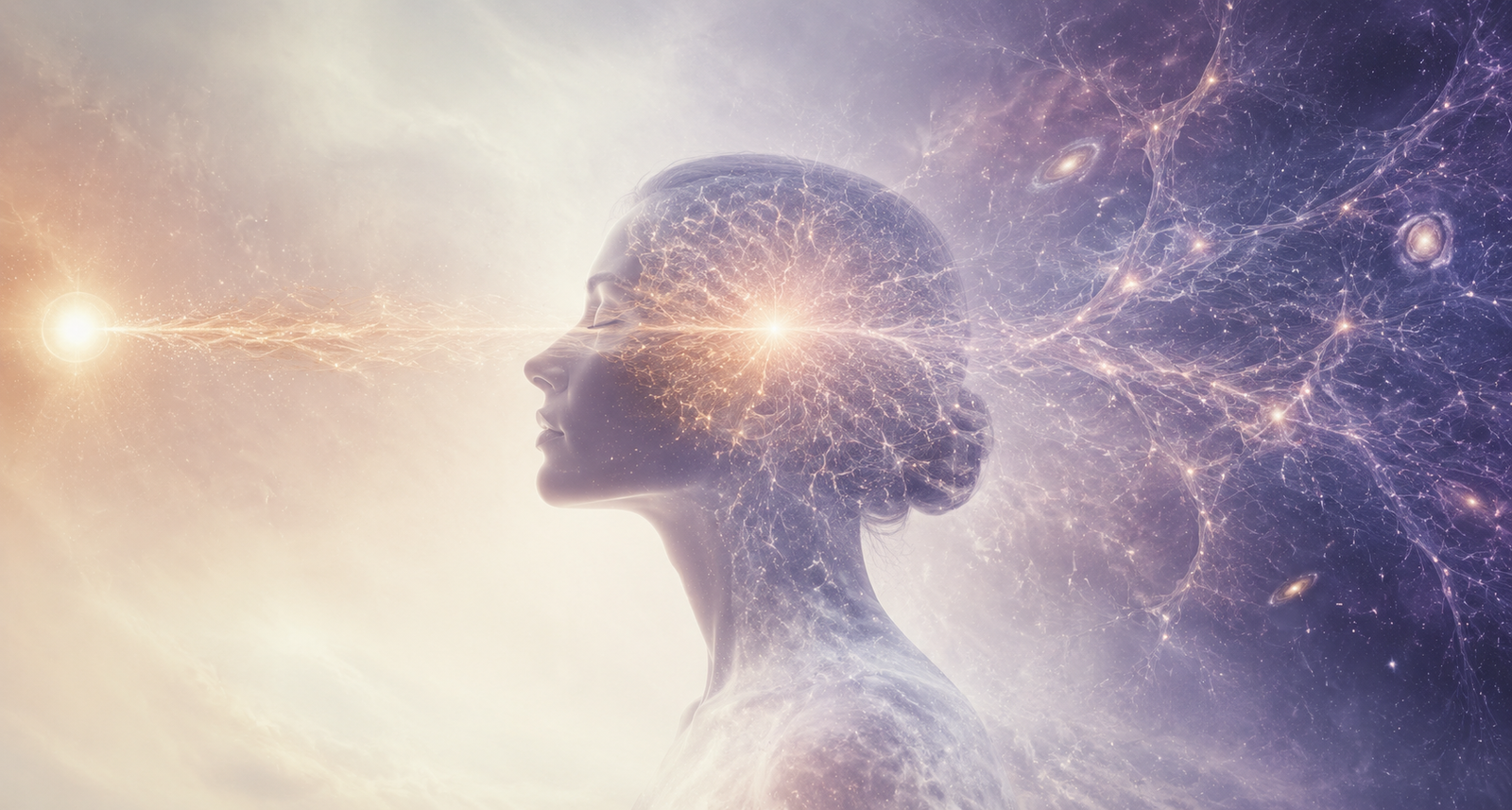
The mystery of your awareness might be written in the stars of the ancient past. Uncover the cosmic connection between the dawn of time and your own internal experience.

In the heart of Moscow, a daring experiment strips away perfumes and social masks to reveal the raw, invisible language of the human armpit. What if your soulmate isn't found through a digital swipe, but through the primal, "goaty" pheromones trapped within a mysterious glass jar? From newborns finding their mothers to the secret chemistry of a handshake, our noses are constantly whispering truths that our eyes cannot see. Is it possible that the "MHC" genes hidden deep in our cells are the true architects of desire, guiding us toward the perfect biological match? One participant found "sex epitomized" in Jar 15, while a longtime couple faced a hilarious disaster when their scents failed to align. Step into the VIP lounge of olfaction and discover why the most honest conversations we ever have might be the ones we never say out loud.

Forget the simple math of \"energy in versus energy out,\" because your body is playing a much more mysterious game. The very clock on your wall and the rhythm of your jaw could be secretly dictating how much fuel you actually keep. Why does a midnight snack trigger a biological storm, while the same bite at dawn vanishes without a trace? Deep within, a bustling, invisible community of microbes is deciding your fate, turning one person\'s feast into another\'s fast. From the structural secrets of a single almond to the 15-minute hormonal countdown, your digestion is a race against time. Unlock the hidden clockwork of \"chrononutrition\" and discover why your unique biological fingerprint is the ultimate weight-loss key.

Fossils found in Niger revealed a new dinosaur species called Spinosaurus mirabilis, living about 95 million years ago. It is closely related to Spinosaurus aegyptiacus, a large fish-eating dinosaur discovered in 1915. The study, published in Science, suggests Spinosaurus was a shoreline hunter rather than a deep-water predator. According to Paul Sereno, it behaved like a giant “hell heron,” stalking fish in shallow rivers. Its long snout, strong neck, and long legs were adapted for striking prey in shallow water, not open seas. The large crest on its head likely served for display or signaling, not combat, helping confirm it as a distinct species.
The article explains that consciousness evolved gradually, not suddenly, beginning with simple life forms. Early organisms developed a basic sense of self vs environment, forming the roots of subjectivity. With multicellular life, nervous systems enabled faster communication and reflex-based behavior. Consciousness likely emerged during the Cambrian explosion, driven by predator-prey adaptation and improved sensory systems like vision. Over time, higher functions such as memory, self-awareness, and reflection developed. Ultimately, consciousness provides adaptive advantages by integrating sensory data, enabling prediction, flexible behavior, and better survival decisions.
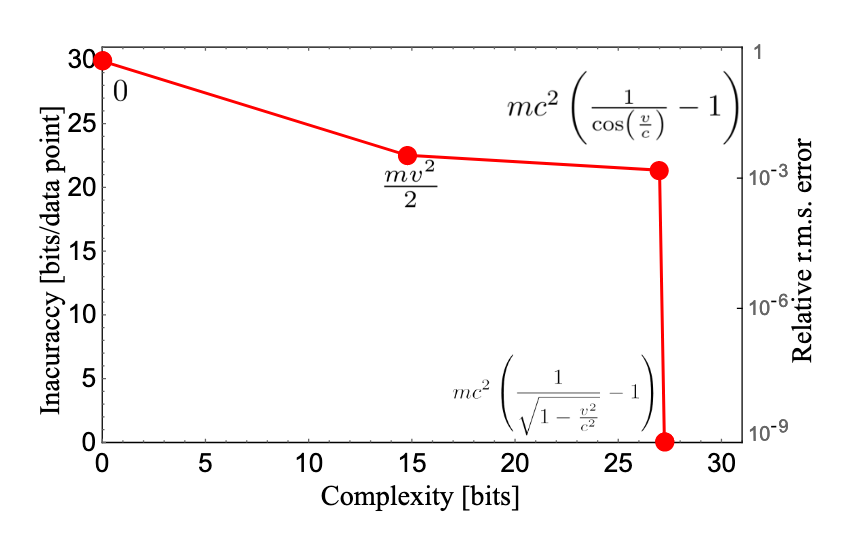
The article argues that science is not a fixed truth but an evolving process where knowledge is constantly revised. It explains that scientific models are tools for prediction, not perfect representations of reality. Multiple different models can explain the same phenomenon, making it impossible to define a single “true” reality. Human understanding is limited, favoring simple and elegant theories even if reality may be complex or chaotic. The concept of model-dependent realism suggests that truth depends on the usefulness of models rather than absolute accuracy. Ultimately, science helps us predict and interact with the world, but may never fully explain or unify reality.

Researchers identified a reproducible gene expression program linked to neurotransmission in the living human brain, offering new insight into cognition and behavior. Unlike past studies using postmortem tissue, this research combined real-time brain activity with gene expression data from over 100 patients undergoing neurosurgery. The study revealed a coordinated set of genes whose activity directly tracks neuronal signaling in the prefrontal cortex. Led by Alexander Charney, the work marks a major advance in studying active brain biology. Findings connect genetic activity with electrical brain function, improving understanding of neural circuits and synaptic processes. This breakthrough may enhance diagnosis and treatment of disorders like depression, schizophrenia, and epilepsy through more precise, gene-based approaches.
Hit the dice and discover a handpicked article you might not find on your own.